
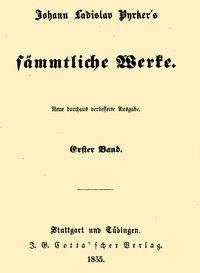
Tunisias by János László Pyrker
Let's be clear: 'Tunisias' isn't your typical novel. It's a sprawling epic poem written in the 1820s by a man who was a major political and religious figure in the Austrian Empire. János László Pyrker uses the distant past to explore ideas about power, faith, and destiny that were very much alive in his own time.
The Story
Pyrker takes us back to the 3rd century BC, to the brutal conflict between Rome and Carthage known as the First Punic War. The poem centers on the legendary Carthaginian general Hamilcar Barca (father of the famous Hannibal) and the Roman consul Marcus Atilius Regulus. It's a story of naval battles, sieges, and personal honor. Pyrker doesn't just list events; he imagines the speeches, the doubts, and the fierce national pride on both sides. The title 'Tunisias' itself points to the heart of Carthaginian power in North Africa.
Why You Should Read It
What grabbed me was the perspective. This isn't a modern historian's analysis. It's a Romantic-era vision of the ancient world, full of grand emotions and moral questions. You can feel Pyrker wrestling with the nature of leadership and the cost of empire through these historical figures. The language is lofty and dramatic, which perfectly suits the scale of the conflict. It’s like listening to a powerful, old-fashioned oration about the rise and fall of civilizations.
Final Verdict
This book is a niche gem. It's perfect for readers who love classical history but want to see it through a different lens, or for anyone interested in 19th-century European thought. If you enjoy epic poetry like Homer or Virgil, and don't mind a slower, more contemplative pace, 'Tunisias' offers a remarkable and almost forgotten viewpoint. It's not a light beach read, but for the right reader, it's a captivating journey into how the past was imagined just a couple of centuries ago.
Elijah Anderson
5 months agoI decided to give this a chance and the content strikes a great balance between detail and readability. This sets a high standard for similar books.
Emily Green
4 months agoThis was recommended to me by a colleague and the diagrams and footnotes included in this version are very helpful. This made complex ideas feel approachable.
Anthony Hill
2 weeks agoSurprisingly enough, the attention to historical detail adds a layer of realism that is rare. I would gladly recommend this to others.
Richard Martin
2 months agoMake no mistake, the content flows smoothly from one chapter to the next. I learned so much from this.

Noah Ramirez
3 weeks agoThis download was worth it since the examples add real-world context to abstract ideas. Thanks for making this available.