
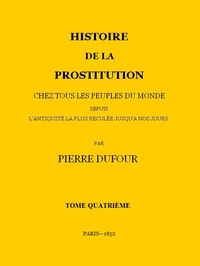
Histoire de la prostitution chez tous les peuples du monde depuis l'antiquité…
Forget a single narrative. This book is a global survey. The author, Paul Lacroix (writing as P.L. Jacob), sets out to compile everything he can find about prostitution across different cultures and eras. He starts in ancient civilizations like Babylon and Greece, moves through the Roman Empire and the Middle Ages, and eventually lands in the cities of 19th-century Europe and beyond. It's less of a flowing story and more of a methodical, continent-by-continent catalog.
Why You Should Read It
You don't read this for easy answers. You read it to see how a 19th-century scholar grappled with a topic that was everywhere but rarely discussed openly. The value isn't in its absolute historical accuracy by today's standards—it's in the perspective. You see the author's own biases and the moral framework of his time laid bare on every page. It's a primary source about being a primary source collector. You get glimpses of real lives and social structures, but they're filtered through a very specific lens. It makes you think critically about who gets to write history and what stories they choose to tell (and how they tell them).
Final Verdict
This is not a book for casual bedtime reading. It's dense, dated, and can be a slog. But it's perfect for history nerds, sociology students, or anyone interested in the history of sexuality and social attitudes. Think of it as a challenging but rewarding artifact. If you approach it as a window into the 1850s mind, rather than a definitive modern textbook, you'll find it incredibly revealing. Just be prepared to read between the lines.
Mark Green
5 months agoTo be perfectly clear, the clarity of explanations makes revisiting sections worthwhile. Thanks for making this available.
John Wilson
4 months agoI have to admit, the organization of topics is intuitive and reader-friendly. Thanks for making this available.
Brian Young
1 month agoThis quickly became one of those books where the writing remains engaging even during complex sections. Well worth recommending.




Amanda Gonzalez
1 month agoAt first I wasn’t convinced, but the writing style is poetic but not overly flowery. This has earned a permanent place in my collection.