
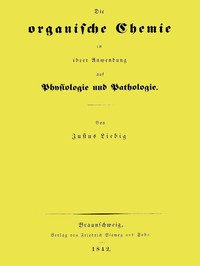
Die organische Chemie in ihrer Anwendung auf Physiologie und Pathologie by Liebig
Published in 1842, this book is Liebig's grand project to apply the rigorous tools of laboratory chemistry to the messy, living world of plants, animals, and humans. He systematically breaks down physiological processes—like digestion, respiration, and muscle movement—into series of chemical reactions. A huge focus is on metabolism: how food is not just bulk, but fuel, and how the body 'burns' it. He also applies this logic to disease, suggesting pathologies could stem from chemical imbalances or failures. It's a manifesto for a new, material understanding of life.
Why You Should Read It
You get a front-row seat to a major shift in thinking. Liebig writes with conviction, dismantling old ideas about 'vitalism' with chemical evidence. It’s not a dry recitation of facts; it's an argument, and you can feel his passion. While some specifics are outdated, the core approach—that life obeys chemical rules—is now the bedrock of biology and medicine. It makes you appreciate how groundbreaking it was to link something as simple as a piece of meat to the complex energy that lets you think and move.
Final Verdict
Perfect for readers curious about the history of science and medicine, or anyone who loves seeing how a single, powerful idea can change everything. It's not a light read, but it's a profoundly important one. You won't find modern biochemistry here, but you will find its bold, ambitious, and sometimes flawed blueprint. Think of it less as a textbook and more as the origin story for how we understand our own bodies.
Anthony Williams
2 months agoReading this felt refreshing because the writing style is poetic but not overly flowery. I learned so much from this.
Dorothy Young
1 month agoWithout a doubt, the attention to historical detail adds a layer of realism that is rare. A solid resource I will return to often.


Susan Williams
3 months agoAs a long-time reader of this gene, the examples used throughout the text are practical and relevant. I appreciate the effort put into this.